AI & Politics
As artificial intelligence (AI) diffuses through our lives, it reconfigures central aspects of politics and society as we know it. The Faculty of Social and Behavioural Sciences launches a research priority area in 'Artificial Intelligence & Politics' that will stimulate the interdisciplinary research in this field for a period of five years with an annual budget of 250,000 euros.
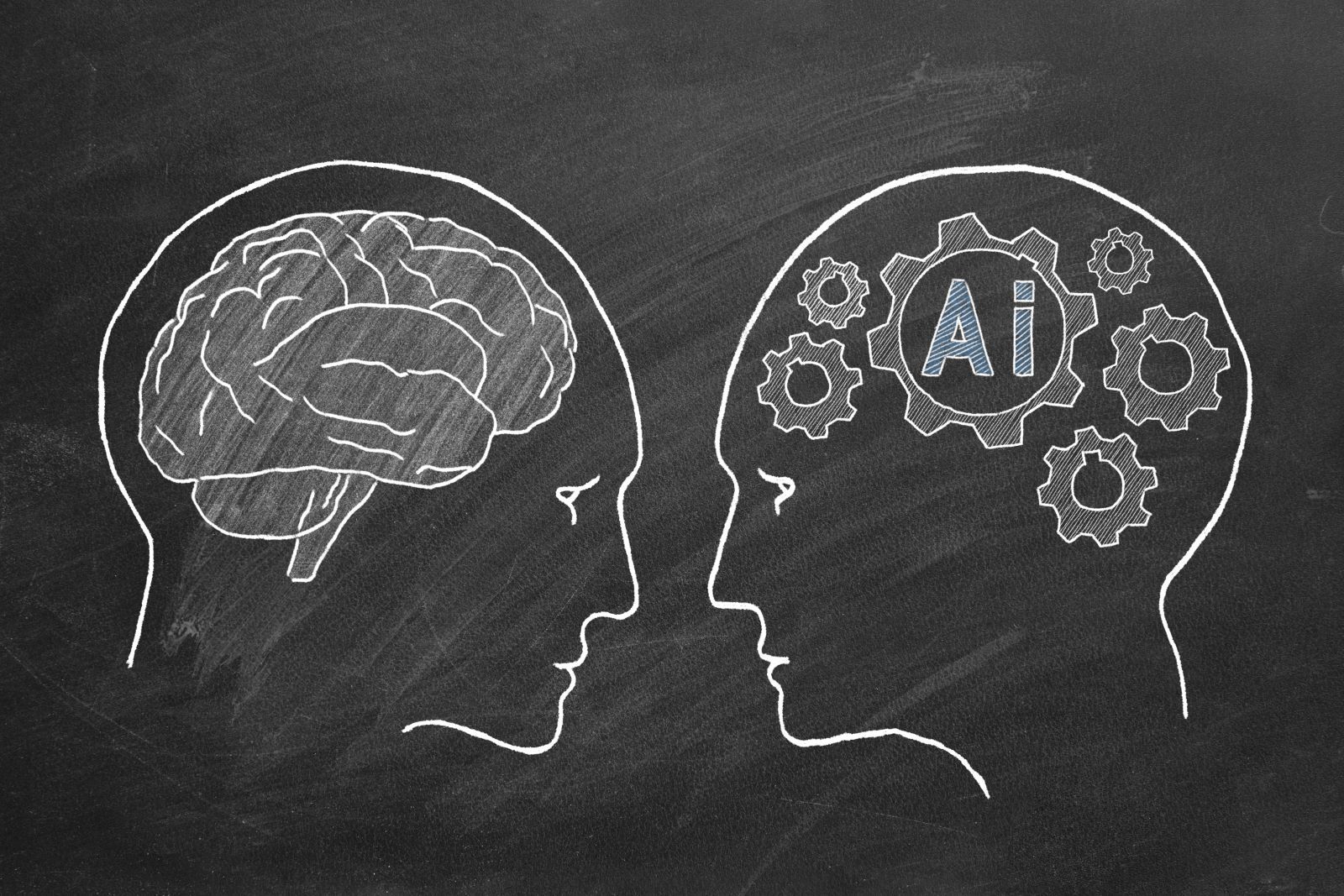
RPA Artifical Intelligence & Politics
As artificial intelligence (AI) diffuses through our lives, it reconfigures central aspects of politics and society as we know it. It affects political deliberation as well as how and to whom public services are delivered. Visionary AI narratives – be they utopian or dystopian – may have great consequences for how new technologies are regulated (or not). Generative AI spurs the production and dissemination of disinformation, which may further erode political trust and challenge the functioning of democratic institutions. But AI is also used to detect and counter disinformation, helping us to deal with the dangers it creates. Moreover, AI tools can function as private companions whom we ask all manner of personal and societal questions, which changes how citizens are politically socialized. It also transforms political issues into technical problems to be solved through private means, thus replacing democratic institutions with private interests. Fuelled by rapidly expanding automated data collection, AI is a potent tool in the hands of the powerful, not least to maintain political order and to vie for and reproduce control, while also opening novel avenues for resistance.
The Artificial Intelligence & Politics RPA will combine research at the Faculty of Social and Behavioural Sciences into the interaction between AI and politics (in broad terms) with research into the social consequences of this interaction. The guiding question for this line of research is: how is AI changing contemporary politics, and how is the development and application of AI affected by political dynamics?
This RPA embraces a broad definition of politics, spanning both formal and informal dynamics through which societal challenges and conflicts are processed in a variety of contexts. The RPA focuses on four dimensions in which AI challenges traditional political dynamics:
Seed funding programme
The RPA AI & Politics offers a seed funding programme to all researchers at the University of Amsterdam’s Faculty for Behavioral and Social Sciences (FMG). This seed funding programme will help to integrate existing research that is currently dispersed over at least four departments – communication science, sociology, political science, and geography and international development. The seed funding program adds value in bringing them together to understand the interconnections between the different parts of the AI-politics link that they explore.
Four postdoc projects
By sponsoring four postdoc projects that each centrally focus on one of the RPA dimensions the RPA also deepens the research agenda on AI & Politics. The postdocs will conduct their own empirical research projects and help to build the community by organizing events, research meetings, and activities and to disseminate academic knowledge among relevant stakeholders outside academia. The assigned postdocs for these projects are Marieke van Hoof and Lisa Fenner.